Chapter 20 — Self-Media Isn't Just Effort — It's a Growth Loop
Content Getting No Views? Often It's Not That You're Not Trying Hard Enough
The biggest waste of time when doing self-media solo is polishing content to full marks from the very start.
It sounds counter-intuitive, but I really fell into this trap. You write deep, research thoroughly, restructure three times. You publish — single-digit reads.
Only later did I realize: in the account-startup phase, what to solve first isn't "is it written well enough", but "is anyone willing to click in".
Workflow
flowchart LR
    A[Trends, comments & user questions] --> B[Topic pool]
    B --> C[Fact pack & viewpoints]
    C --> D[Title and structure]
    D --> E[WeChat / Xiaohongshu / video script]
    E --> F[Cover, long image & storyboard]
    F --> G[Compliance & pre-publish check]
    G --> H[Draft or manual publish]
    H --> I[Data & manual-edit feedback]
    I --> B
A Skill's role is to fill one link, not to take over account judgment. The eight work scenes below explain.
Scene 1: Scrolling Hot Topics Daily but Still Not Knowing What to Write
Hot lists tell you "what everyone's watching", not "why this account should write it". Chasing only hot topics easily yields homogeneous content; going only by feel makes it hard to judge whether users really care.
- WeChat Hot-Article Query: watch hot articles on the same topic;
- Xiaohongshu Hot-Notes Query: get hot notes and data clues;
- Xiaohongshu Comment Insights: extract questions, objections and unmet needs from comments;
- Inspiration Hunter: drop ad-hoc angles into a unified inbox.
How to Write the Instruction
Build this week's topic pool around "AI office automation" — don't write the article yet.
Collect high-interaction content from WeChat and Xiaohongshu over the last 30 days; record title, publish date,
core promise, content structure, interaction signals and the raw link.
Then extract from comments: repeating questions, objections, failure stories and user quotes.

Combine with my account positioning: for non-technical office workers, emphasizing real process and result acceptance.
Output 12 candidate topics, each with: target reader, real problem, existing content gap,
new evidence I can provide, suited platform, production cost and timeliness.
Don't interpret high reads as "the topic must suit me".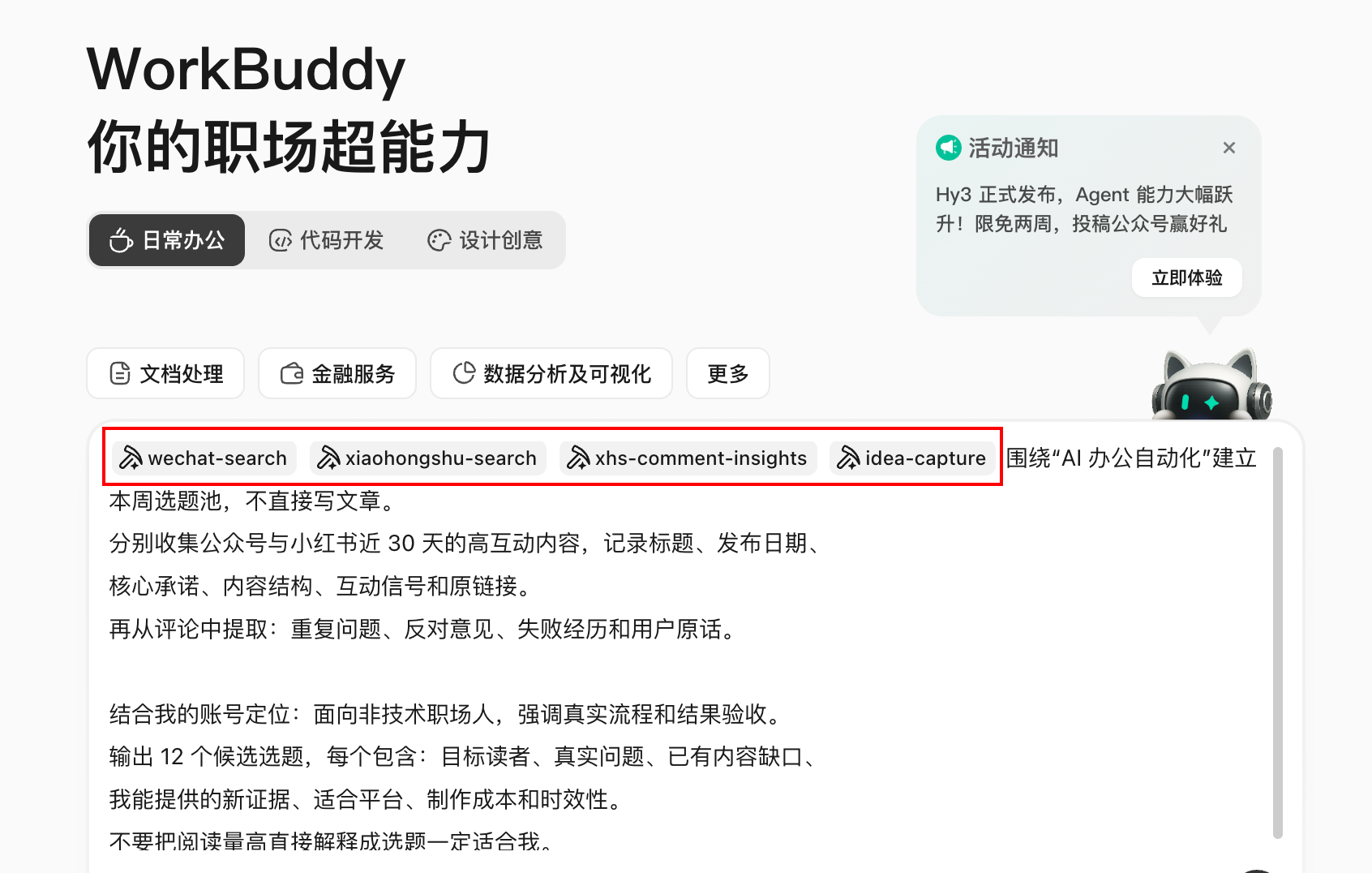
Execution Flow and Result
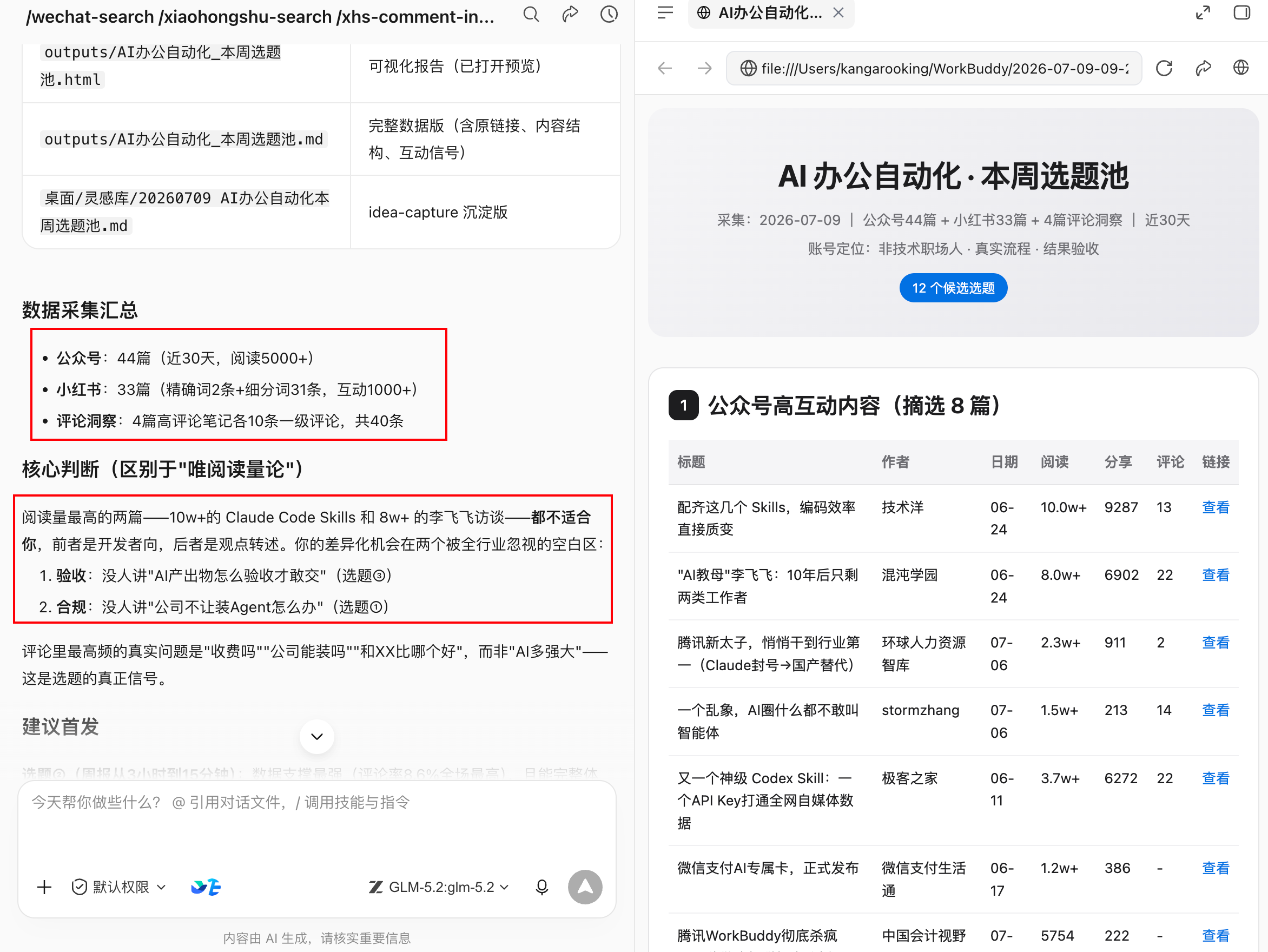
WorkBuddy first generates a cross-platform sample table, then clusters comments into problem clusters, then scores "heat, account-fit, added value, evidence sufficiency, production cost" separately. The deliverable is a topic board you can manually filter.
Sometimes Just Hot Topics Isn't Enough — We Also Need Low-Follower Viral Hits.
You've probably heard: to start an account, find low-follower viral hits to copy. That's true.
PS: "copy" here means copy the topic, not copy the content verbatim.
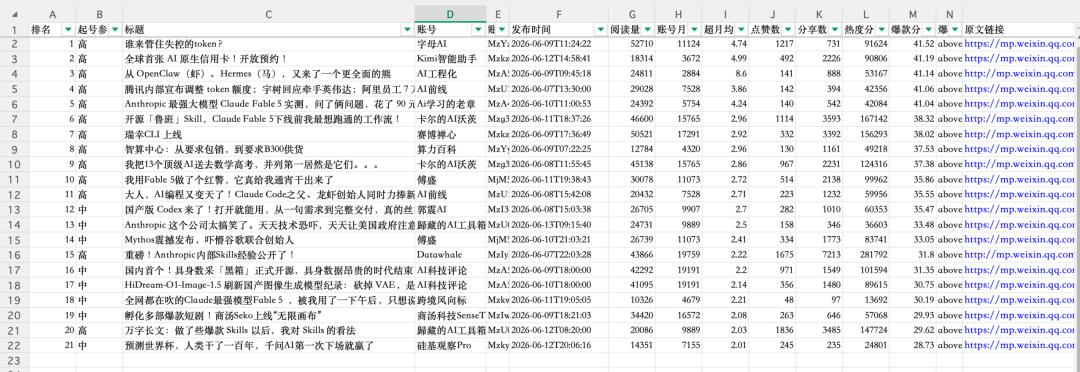
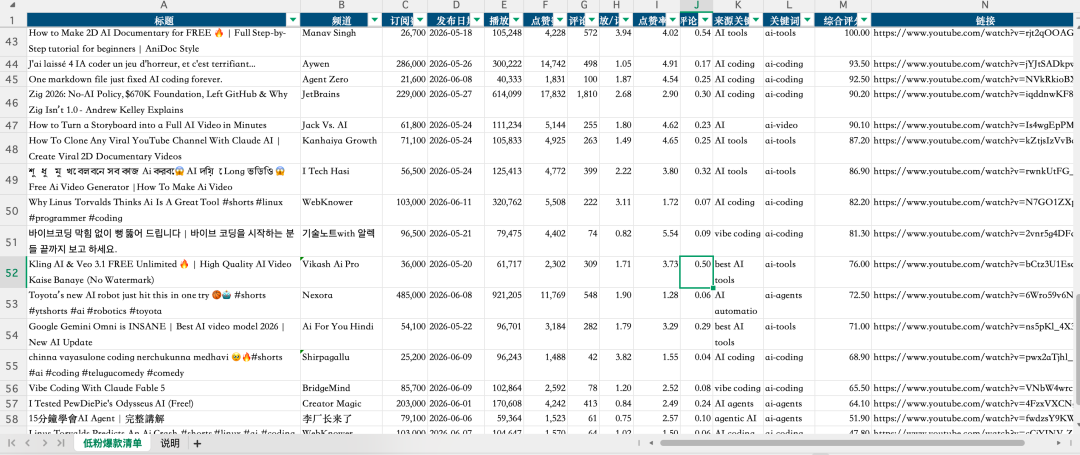
Recommend a skill called viral-topic — it can fetch multiple low-follower viral contents in a given domain across platforms recently.
For example, get the last 7 days' AI-domain low-follower viral articles on WeChat.
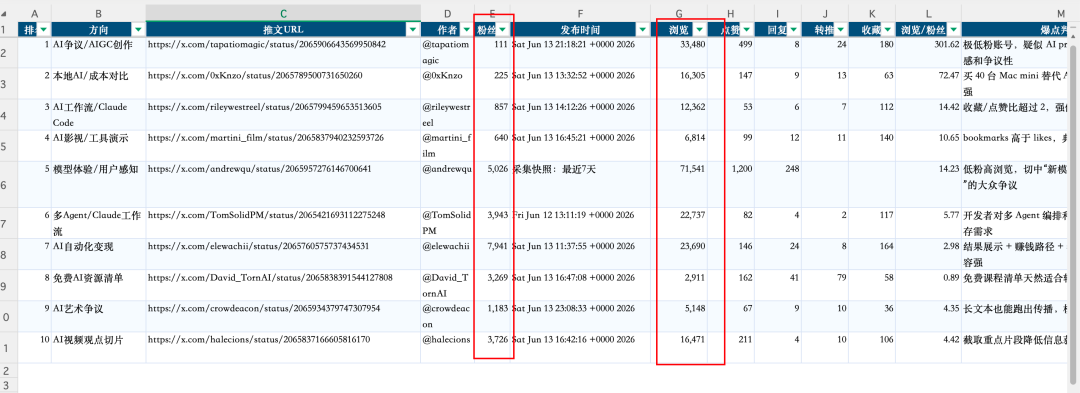
Filter low-follower viral on X.
And low-follower viral on YouTube.
Scene 2: Want Viral Titles, but Not Clickbait
"Give me 20 viral titles" easily yields numbers, suspense and exaggerated promises, with no title actually deliverable by the body. A title isn't a standalone copy — it's a promise between reader and body.
- WeChat Title Generator & Scorer;
- Xiaohongshu Viral-Note Auto-Generator title & tag module;
- Short-Video Hook Plan Generator.
How to Write the Instruction
Read approved-article.md and generate titles only from facts already in the body.
Generate: 8 WeChat titles, 8 Xiaohongshu titles, 5 short-video opening hooks.

For each candidate output:
1. Who it targets; 2. What it promises; 3. Which body paragraph delivers it;
4. The question/result/list/case/counter-intuitive angle used;
5. Credibility, specificity, platform-fit and exaggeration-risk scores.

Delete unprovable numbers, absolute promises, fake scarcity and conclusions inconsistent with the body.
Don't auto-pick the final title — let me confirm the content promise first.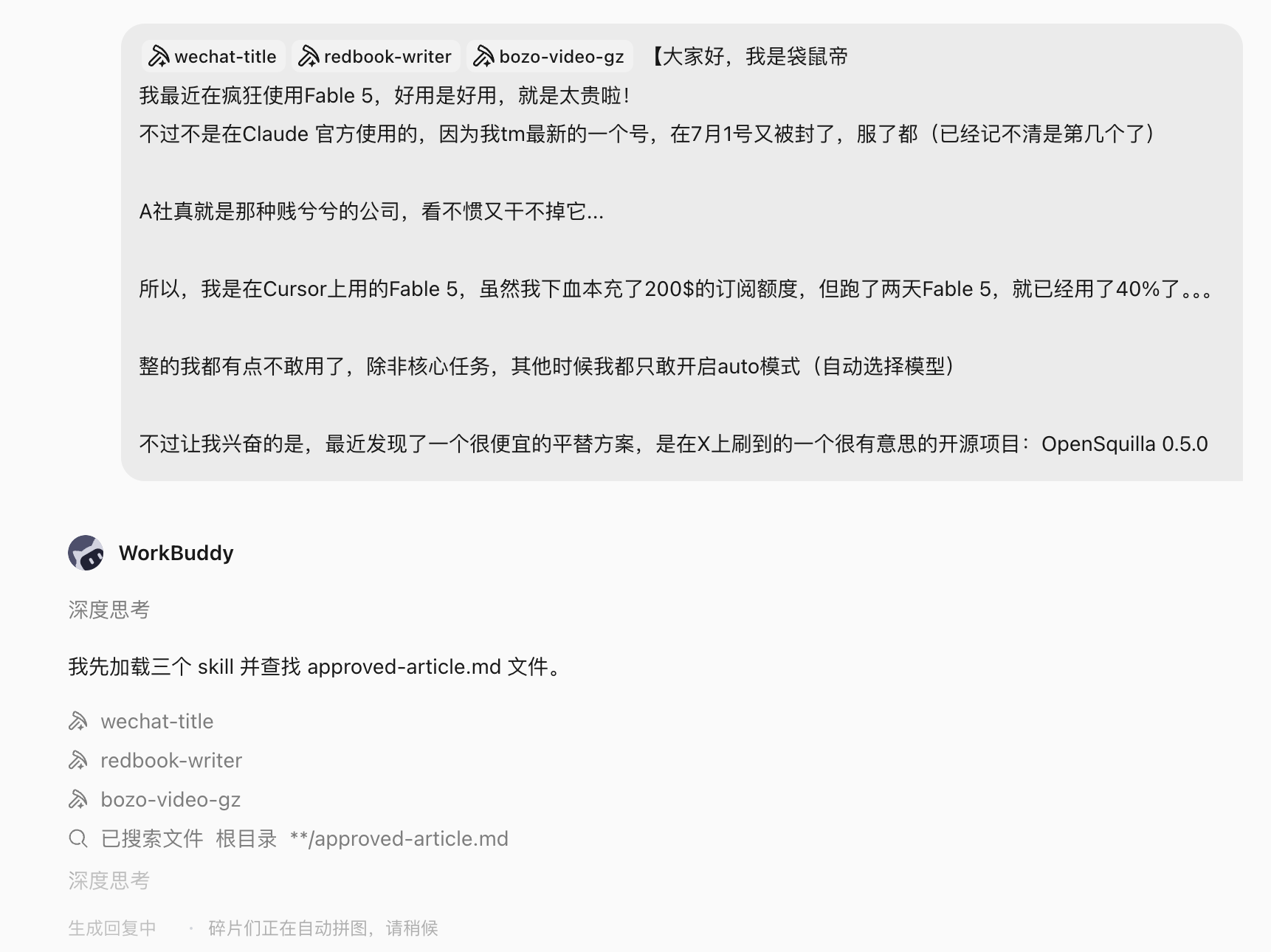
Acceptance Method
Show the title alone to someone who doesn't know the body and ask them to write "what I expect to get if I click in". Then check against the body. If expectation and reality don't match, the title scores don't matter — it's unusable.
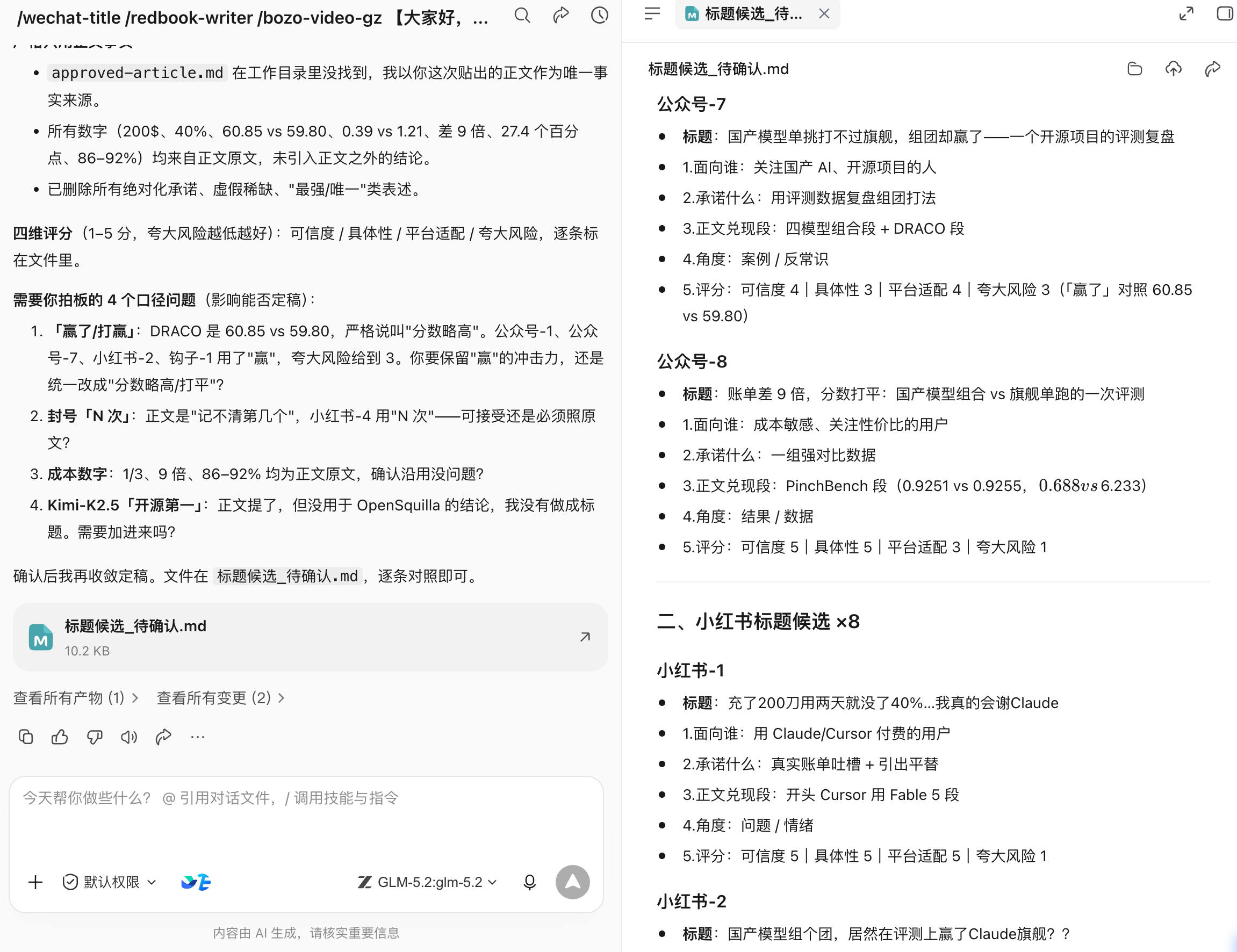
Via these skills, the titles WorkBuddy generates really have that feel. Especially the Xiaohongshu titles — very Xiaohongshu.
You can A/B test, but change only one main variable at a time, e.g. "question-style" vs "result-style". Don't change title, cover, publish time and body opener together — the data won't be interpretable.
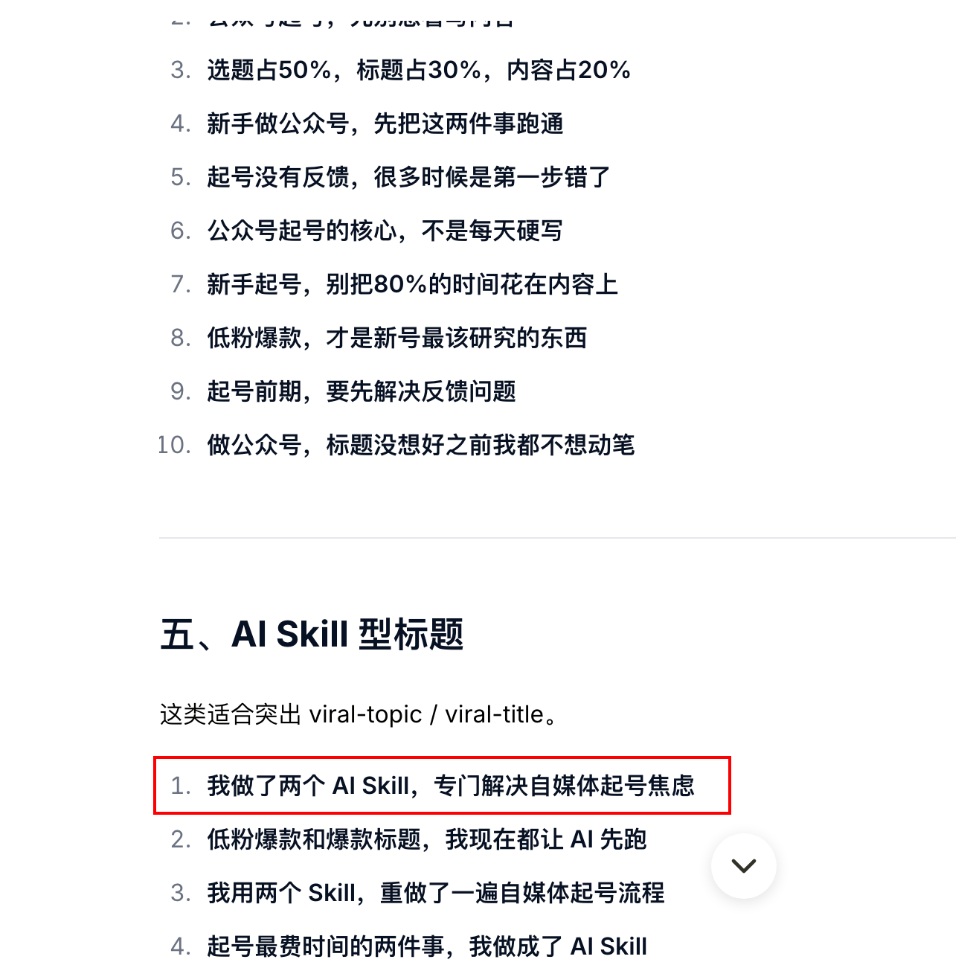
Another title skill to recommend: viral-title — great for WeChat titles.
Scene 3: WeChat Cover From a Blank Canvas Every Time
A cover must convey the topic and fit large/small covers, safe areas and the account brand. Just saying "make a high-end cover" usually yields decoration unrelated to the body, wrong text or a distorted logo.
- WeChat Viral Cover Generator: analyze visual patterns of the same track and give plans;
- WeChat Image Generator: handle large/small covers, in-body images and guide images;
- A poster-design or image-generation Skill: execute the confirmed visual brief.
How to Write the Instruction
Make a WeChat cover brief for the article "Bookmarks Aren't Knowledge Management — Reuse Is".
Target reader: knowledge workers; core message: from collecting to a reusable knowledge flow.
Brand colors: #1677FF, white, black; ban purple gradients, exaggerated tech-glow and fabricated product UI.

First output 3 composition directions, each with: subject, hierarchy, cover copy, color, whitespace,
large/small cover crop risk and the corresponding body paragraph. Generate images after I confirm.
After generating check: text accuracy, logo distortion, whether the subject gets cropped on small cover,
and whether unauthorized people or material are used. Don't upload to WeChat directly.
Is the Result Usable
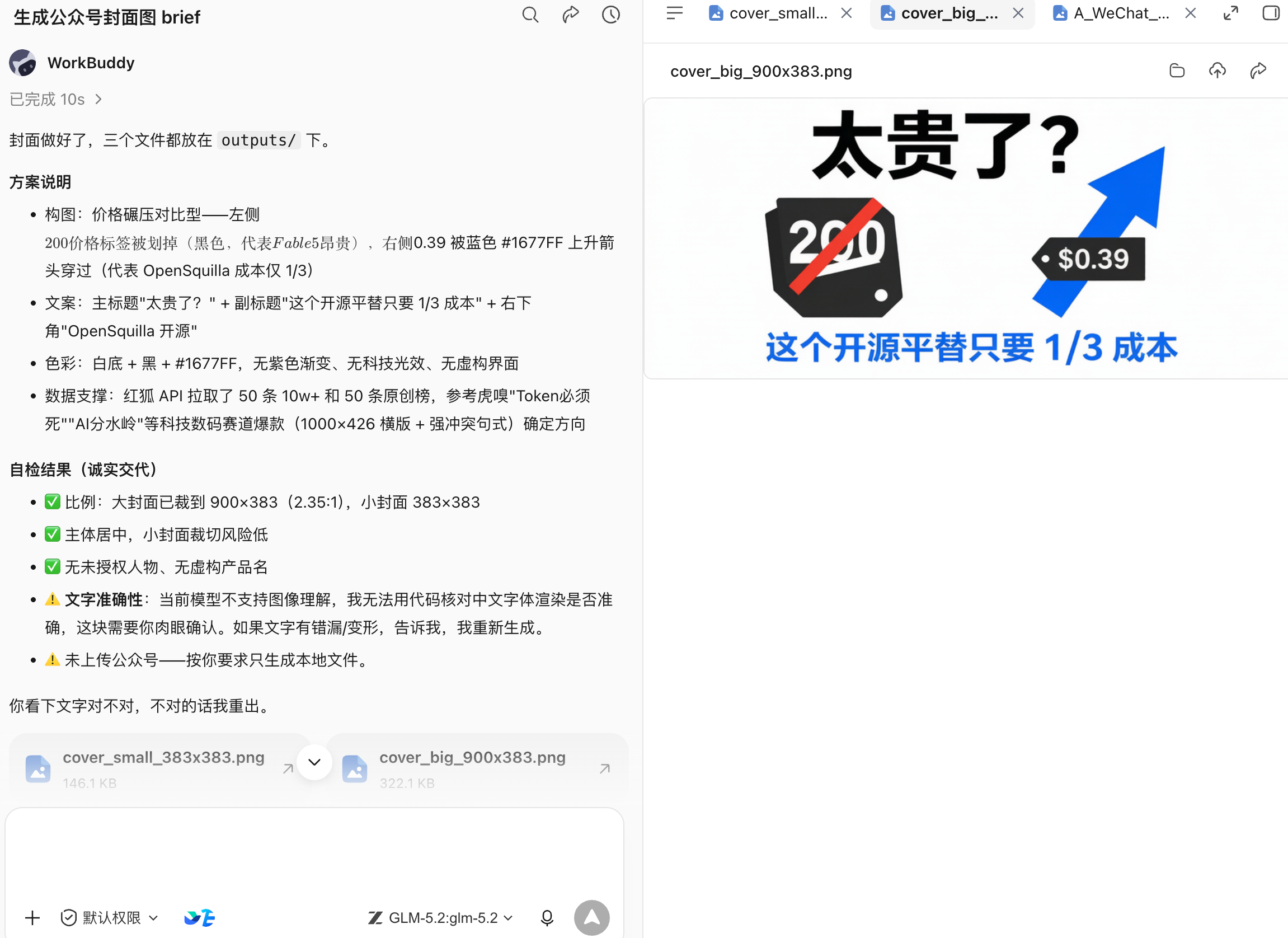
The generated covers are decent — there are Chinese characters, and the theme the cover expresses is fairly apt. With a stronger image model, the result should be even better.
Scene 4: Xiaohongshu Isn't Just "Slice a Long Article Into Nine Images"
When adapting a WeChat article to Xiaohongshu, the common做法 is to shorten paragraphs, add emojis, then lay text across nine cards. The result has lots of info but no cover hook, no承接 on page 2, no action on the last page, and it's hard to read on mobile.
- Xiaohongshu Cover Maker;
- Xiaohongshu Image Generator: render structured content into vertical cards;
- Xiaohongshu Ops Copilot: pre-publish check & review.
Workflow
- Extract a fact pack without platform tone from the long article;
- Pick one core problem; cut side trails unrelated to it;
- Design a sliding rhythm of "cover promise → problem resonance → method → example → pitfall → checklist";
- Output per-page wireframe and word count first, then generate images;
- Check font size, line breaks, margins and emphasis at real phone width;
- Final: title, body, tags and images cross-check numbers and proper nouns one by one.
Turn approved-article.md into an 8-page Xiaohongshu image set — don't add facts.
Page 1: one promise only; page 2: the problem the reader is living;
pages 3–6: one action each with an example; page 7: common pitfalls;
page 8: a saveable checklist.
Return per-page copy, visual hierarchy and expected word count first; call the cover & long-image Skill after I confirm.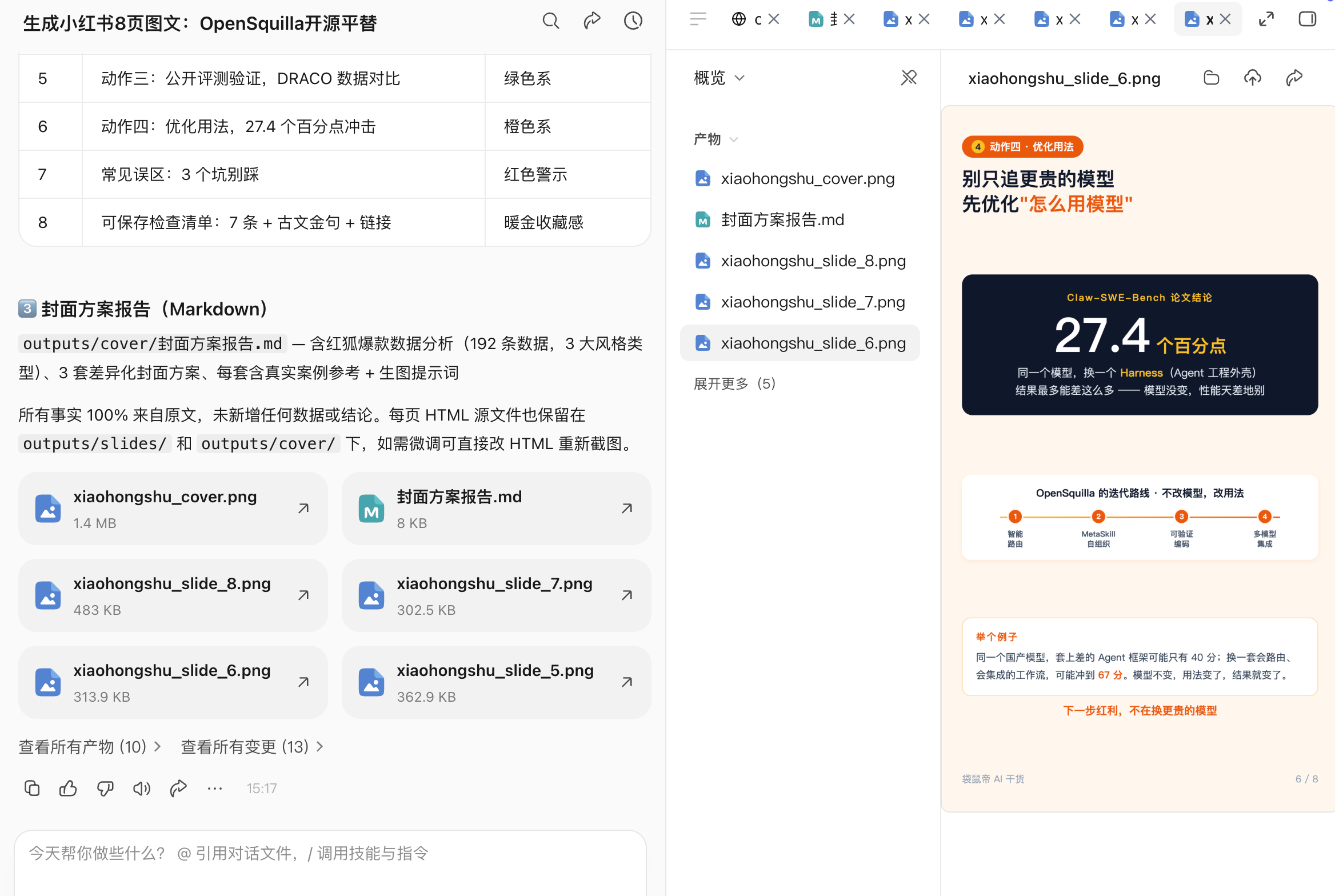
Scene 5: How a Long Article Becomes a Shootable Short Video
"Turn it into a 60-second voiceover" usually just compresses the article into a faster read-aloud, with no shots, rhythm, evidence画面 or pauses, and no note on who can shoot it or what material it needs.
- Short-Video Topic & Material Research;
- Short-Video Script & Matrix Content Factory;
- AI Short-Video Director for storyboard and prompts;
- A music Skill only after confirming copyright and commercial scope.
How to Write the Instruction
Turn this article into a 60-second real-person voiceover, aimed at first-time WorkBuddy users
understanding "why a task brief beats a vague one-liner".
Output a timeline table: duration, shot size,画面, voiceover, on-screen text, material source, transition.
The first 3 seconds must raise a real problem — don't exaggerate gains; show one product-process evidence within 20 seconds;
end with one instruction they can try immediately — no fake engagement promises.
Also list what must be shot live, what can be a product screenshot, and what AI can generate; fabricating user feedback is forbidden.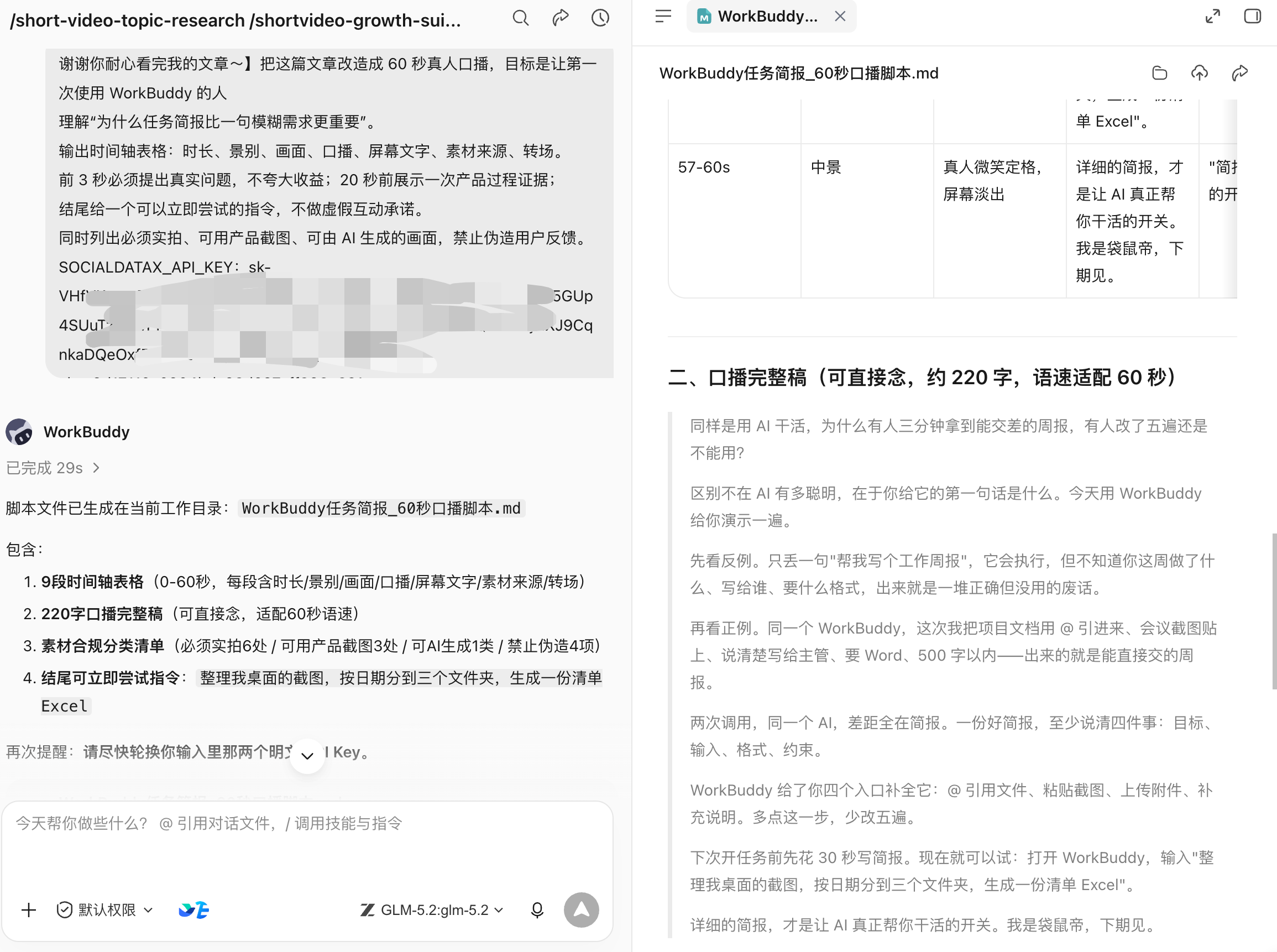
The generated voiceover script is quite decent.
Scene 6: Before Publishing, Don't Let Automation Cross the Responsibility Line
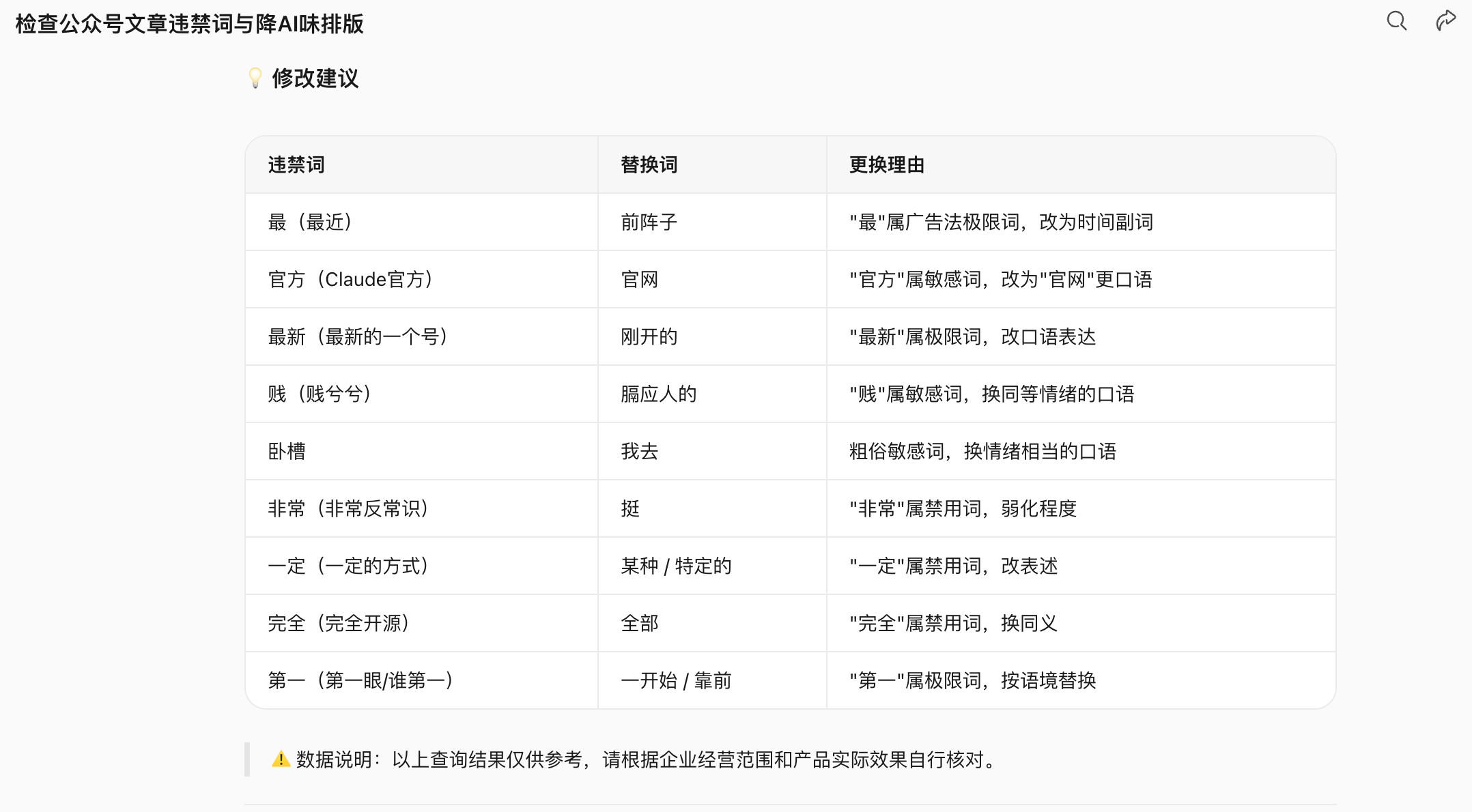
- WeChat Banned-Word Detection: flag risky expressions;
- WeChat Layout Skill: render Markdown and create a draft;
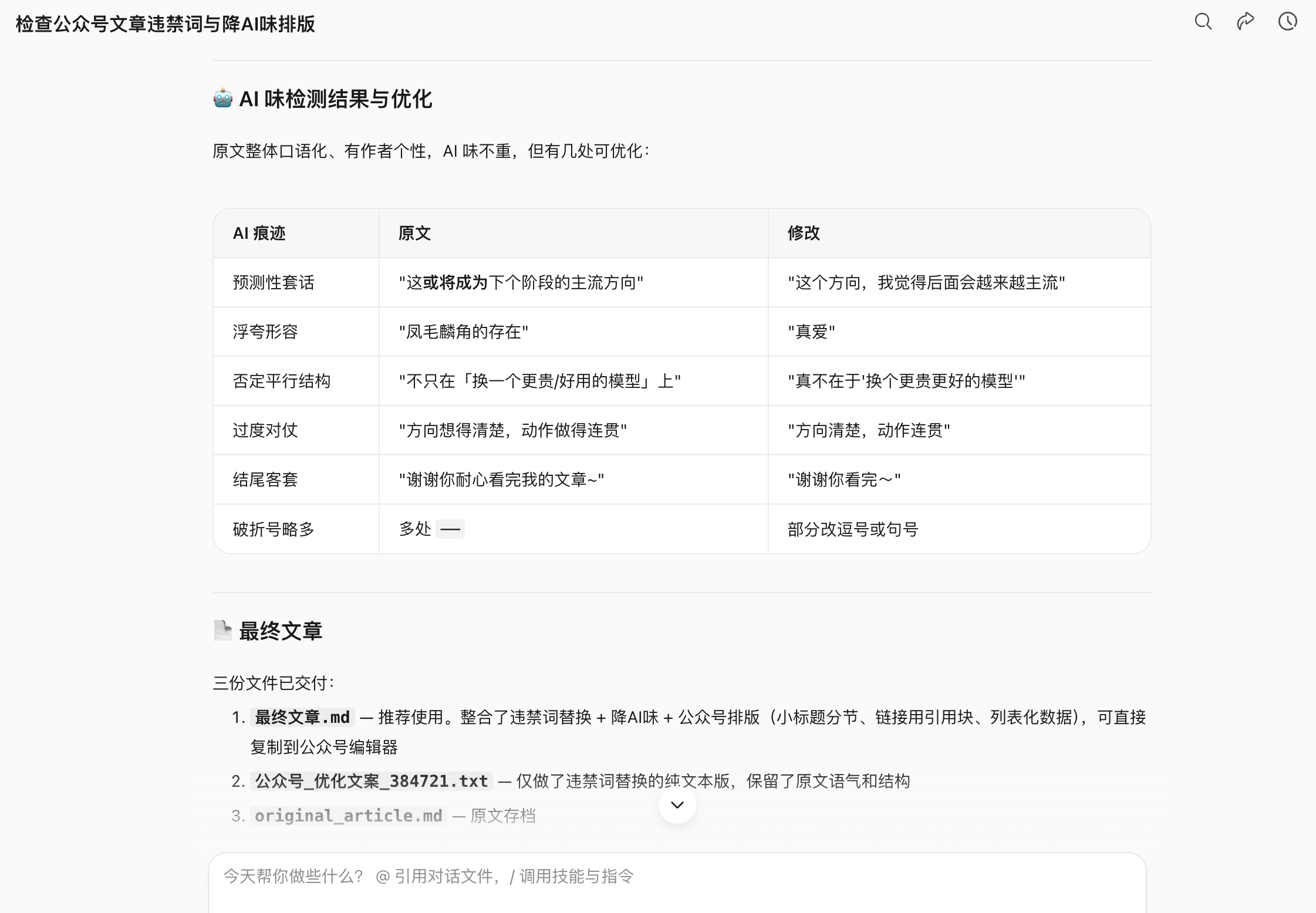
- Article De-AI Tool: only for reducing boilerplate, not for disguising source or originality.
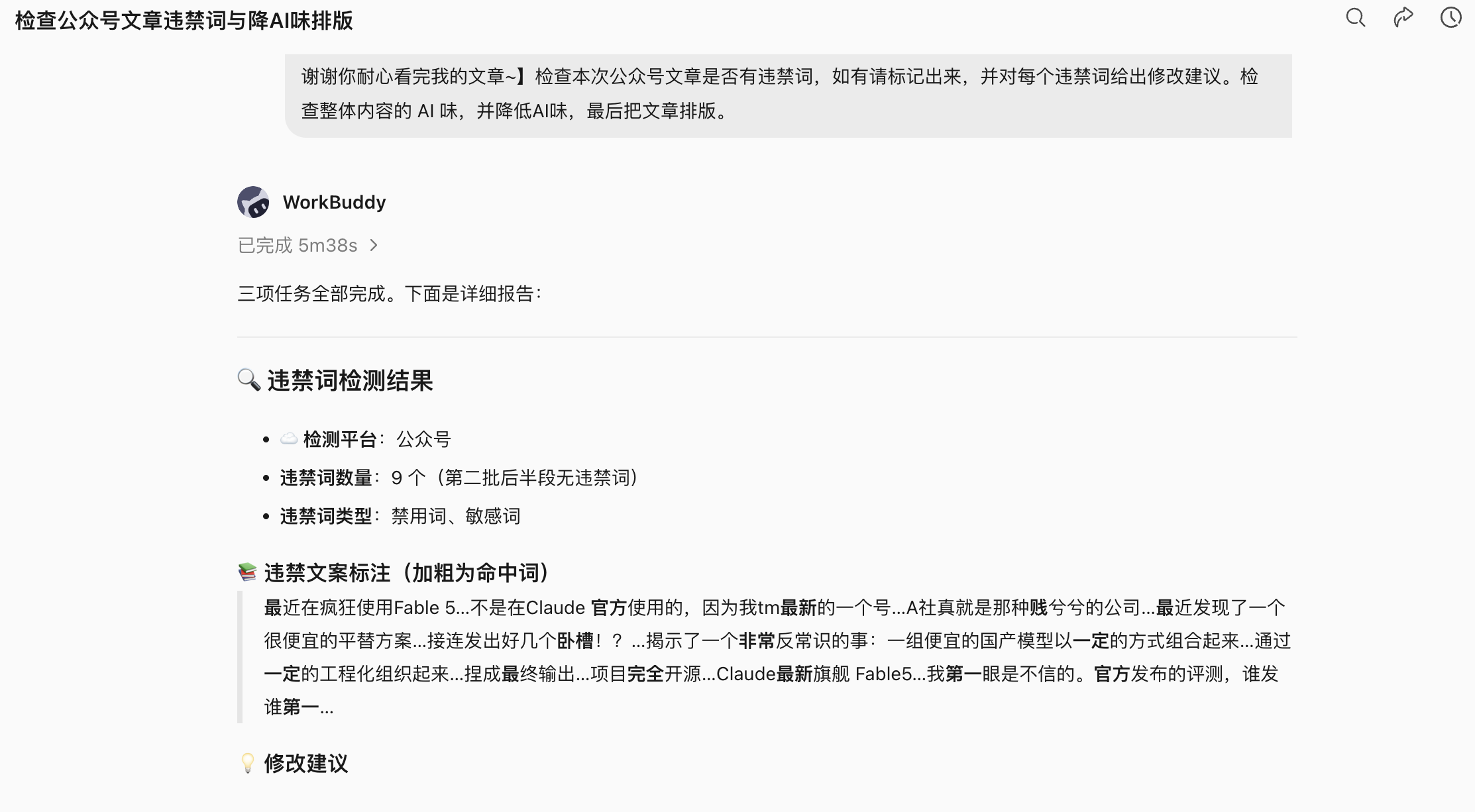
Check this WeChat article for banned words; if any, flag them and give a fix suggestion for each. Check the overall AI tone and reduce it; finally lay out the article.The publish chain should stop at the draft box: fact-check → citation & copyright → brand & compliance → link check → mobile preview → human-confirm account → publish. Auto-likes, batch DMs, comment-farming, bypassing platform risk control and unconfirmed mass-sending are not efficiency scenes this book recommends.
Scene 7: No Review After Publishing, the Next Post Starts From Zero Again
Review is mainly comparing the AI's draft with the human-edited final, letting the skill auto-evolve so next time it writes better content.
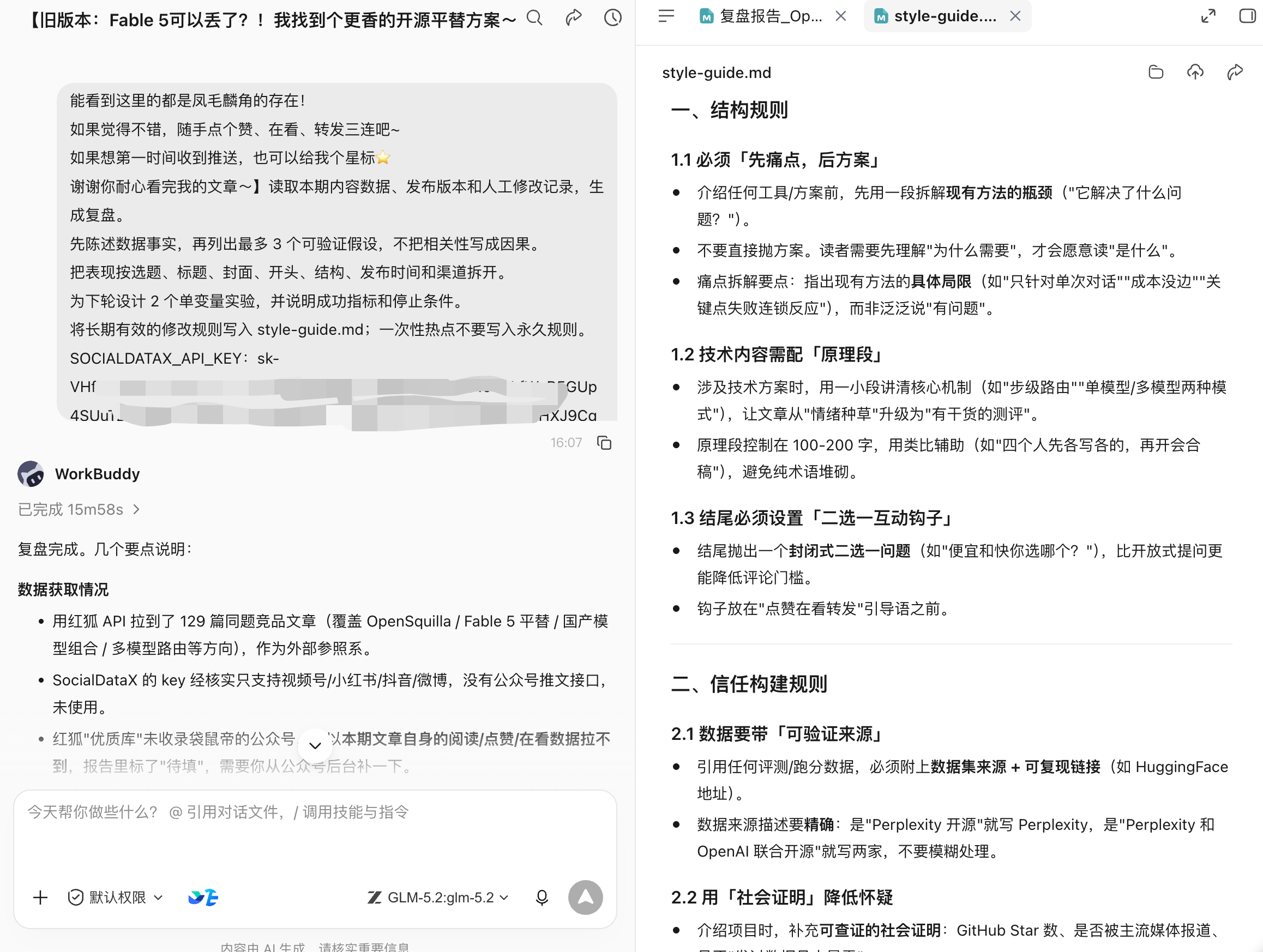
Use WeChat Writing Self-Iteration or the Xiaohongshu Ops Copilot to write human edits and data back into the style library:
Read this issue's content data, published version and human-edit record, and generate a review.
State data facts first, then list up to 3 verifiable hypotheses — don't write correlation as causation.
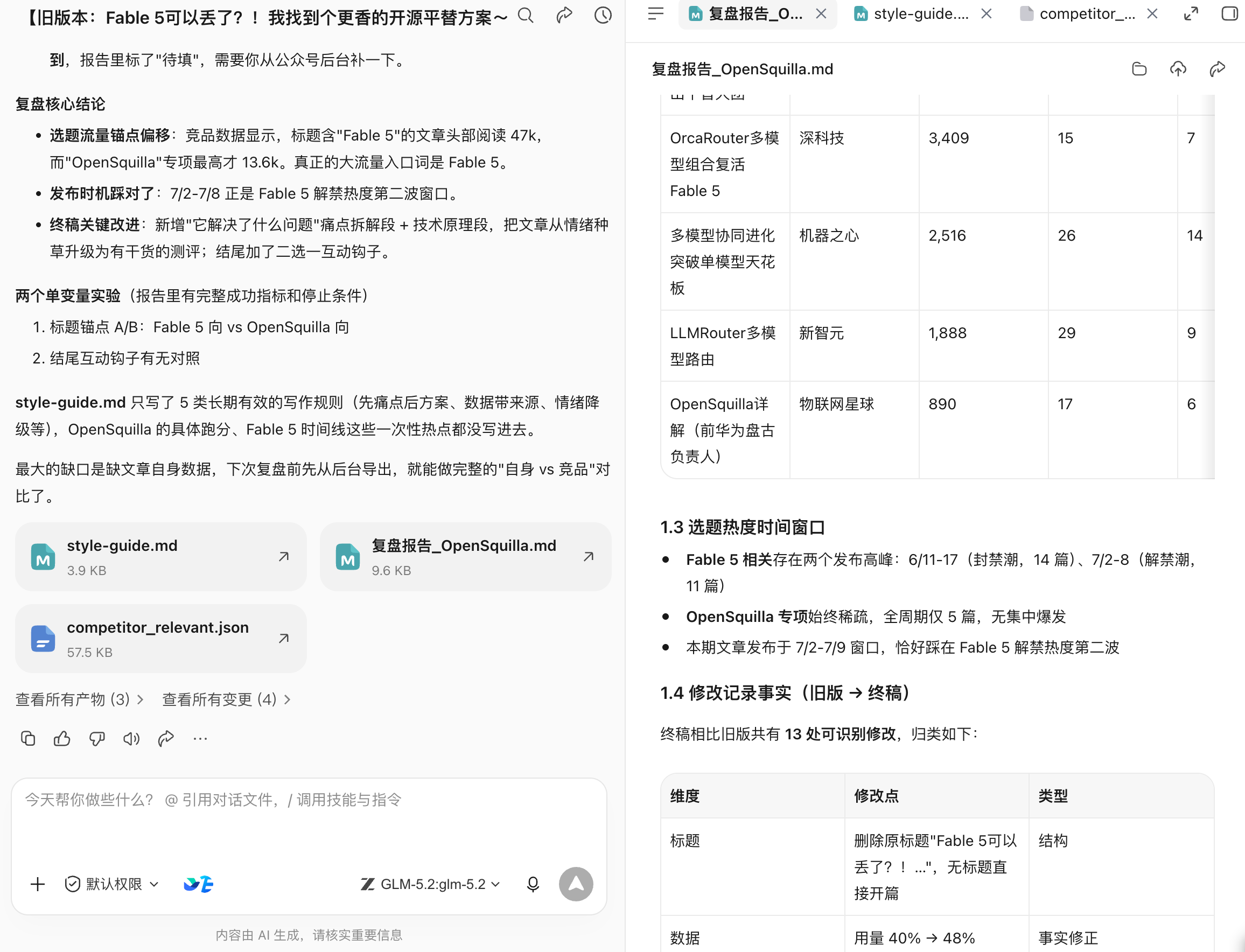
Break performance down by topic, title, cover, opener, structure, publish time and channel.
Design 2 single-variable experiments for the next round, with success metrics and stop conditions.
Write long-term-valid edit rules into style-guide.md; one-off hot topics shouldn't go into permanent rules.
Throw the AI's first draft and the final both in; you get a review report and a style-guide.md, so next time the AI's output is one step closer to what you want.
A Good-Enough Self-Media Skill Stack
| Tier | Install first | Add when |
|---|---|---|
| Starter | Hot-content query, title scoring, image generation | Can already produce one piece of content stably |
| Stable | Comment insights, cover, layout draft, banned-word detection | Account positioning and reviewer are clear |
| Multi-platform | Xiaohongshu cards, short-video script, platform adaptation | Have a unified fact pack |
| Advanced | Data feedback, style iteration, scheduled topic radar | The manual flow has run reliably for 4 weeks |